What was true
The useful problem was operational, not cosmetic
The useful work lived where commerce pressure shows up: customer clarity, order-support flow, internal ownership, and the parts of the system that make staff reconstruct context.
Silly Farm case study
Silly Farm is a useful proof surface because the work sits inside a real Shopify business, not a blank demo. The public story is intentionally contained: live commerce pressure, customer-path clarity, operational handoffs, and repair work that avoids exposing private store data.
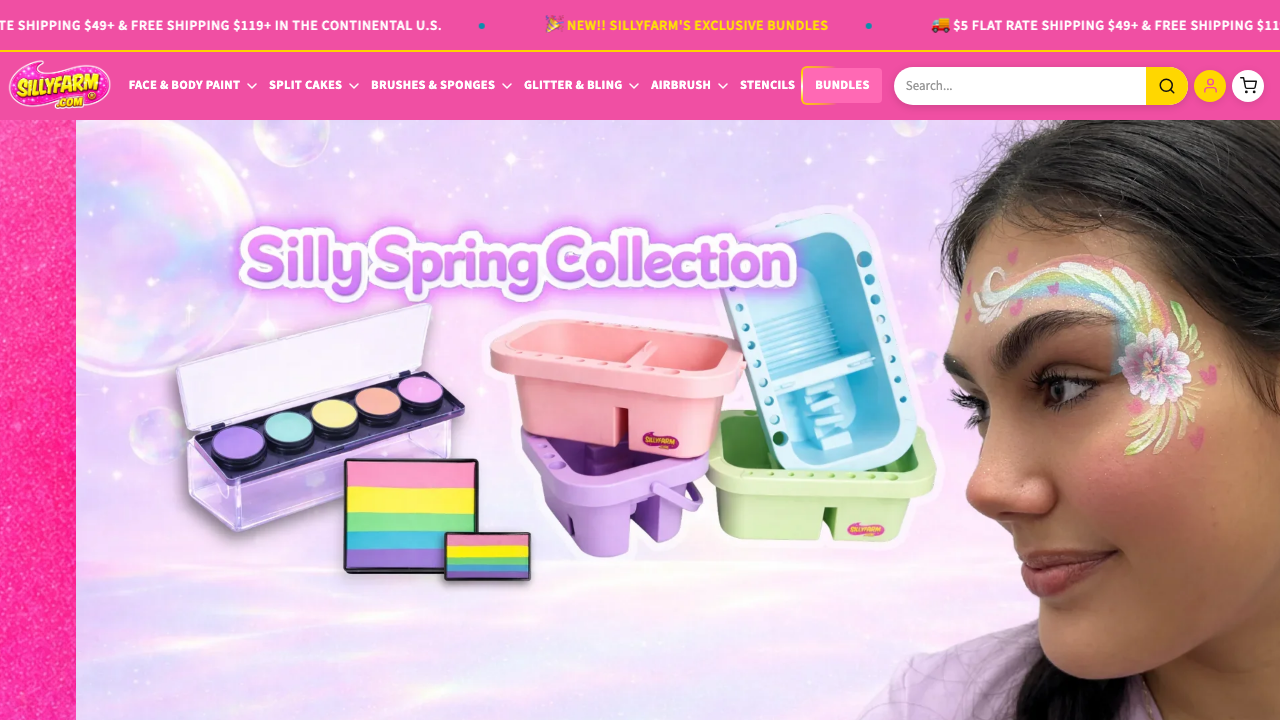
Business context
The value here is not confidential internal detail. It is public-safe proof that Loving Art can improve a working commerce business without turning the job into a bigger reinvention than it needs.
Client context: Silly Farm is an established Shopify commerce business serving professional face-paint and body-art customers.
Public proof surface: the work can be discussed through the live storefront, the case study route, and the visible commerce constraints, not private customer or order data.
Operating pressure: live orders, customer questions, wholesale needs, internal handoffs, and existing systems had to keep moving.
Constraint: the work had to improve the revenue path without turning a contained repair into a broad rebuild.
What was true
The useful work lived where commerce pressure shows up: customer clarity, order-support flow, internal ownership, and the parts of the system that make staff reconstruct context.
What was true
This was not a blank-site exercise. Work had to respect a live Shopify operation, existing tools, customer-facing expectations, and team workflows that could not pause for a dramatic rebuild.
What was true
The right move was to identify the layer creating friction, repair that layer, and leave the business with a clearer handoff instead of inflating the engagement to make the story sound bigger.
What changed
The work connected the public Shopify experience to the operating reality behind it: support requests, order context, wholesale readiness, internal task flow, and the places where ownership can blur.
What changed
The credible proof is not a screenshot of private dashboards or customer records. It is the shape of the work: cleaner context, fewer fragile owner-memory handoffs, and clearer next actions for the team.
What changed
The work stayed focused on the layer most likely to relieve drag. That restraint is the point: fix what is causing the revenue-path friction, prove it can hold, and avoid selling a rebuild when repair is enough.
Proof boundary
Silly Farm gives Loving Art a real Shopify proof surface: public storefront context, commerce operations, wholesale and support pressure, and a client environment where changes have to respect active order flow.
Proof boundary
This page does not expose revenue numbers, customer records, internal dashboards, store credentials, or client-sensitive workflows. The proof is concrete enough to be useful without turning private operations into marketing material.
Proof boundary
The same method applies to another business: locate the point where ready buyers, orders, inquiries, or handoffs lose momentum, then scope one contained repair with a plain-language handoff.
Why it matters
This is most relevant to stores that already have demand, but are still carrying friction in customer clarity, support follow-up, wholesale readiness, ownership, or internal task flow.
Why it matters
The case study matters because it shows the working posture: identify the leak, repair the right layer, and keep the scope defensible enough for the business to own after delivery.
Best next step
The intake is where this becomes specific to your business. Bring the URL, the buyer or booking path, the tools involved, and the point where people, orders, quotes, or follow-up lose momentum. The audit turns that into a ranked leak map and one contained repair recommendation.